
Learning about risks of mosquito-borne diseases for Ohio
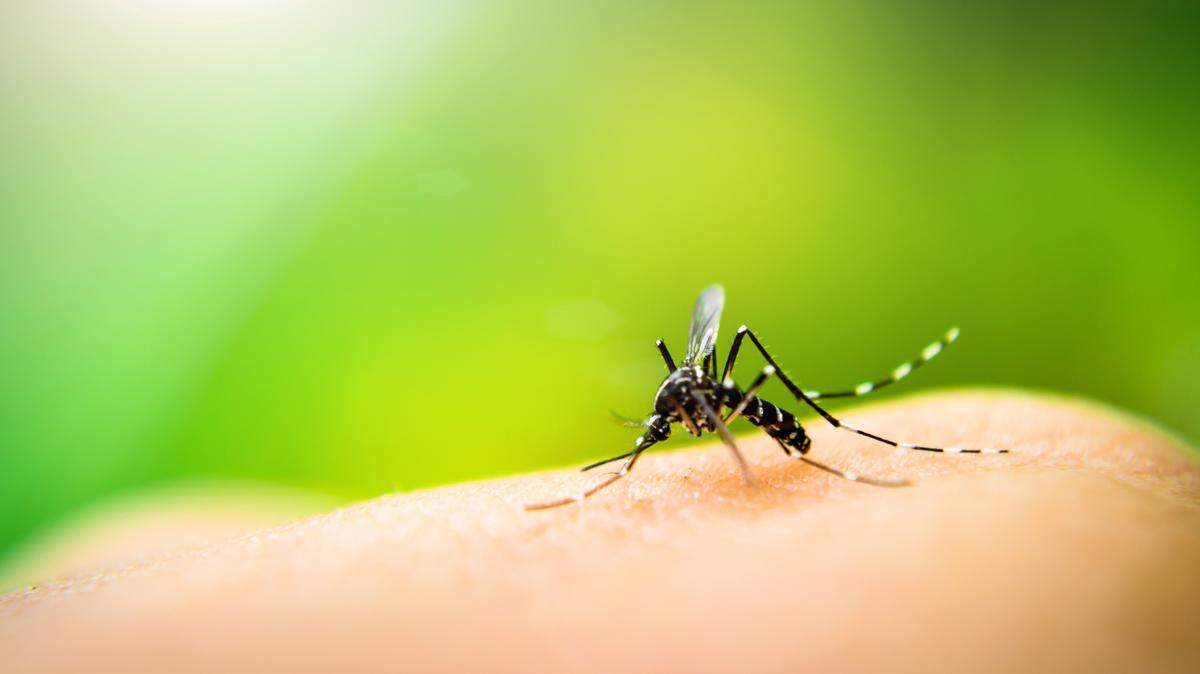
What are the best ways to protect yourself against contracting diseases from mosquitos during the summer?
Dr. Frank Migliore, a rheumatologist at Mercy Health, can ease Ohio residents’ minds about preventing mosquito-borne illnesses.
Dr. Migliore said there are steps you can take to avoid mosquito bites and get rid of the common breeding grounds for the bugs.
“The biggest thing is to try to cover your skin up,” he said. “Towards wooded areas, they tend to be a little more active, especially at dusk. If you’re out, you want to wear long sleeves and long pants if you can, really preventing them in the first place. Their breeding grounds are standing water, so trying to eliminate any standing water is the big thing. And if you know you’re going to be in an area where you’re going to be exposed, bring bug spray like Off!, anything with deet in it to help prevent from getting mosquito bites, but I think we all know in the summer that it’s almost unavoidable to at least end up with some.”
Dr. Migliore said there are at least four main mosquito-borne illnesses: West Nile, malaria, Zika and St. Louis/La Cross encephalitis.
“West Nile is one that has gotten a lot of publicity,” he said. “There’s one called St. Louis/La Cross encephalitis ...which means there’s inflammation in the central nervous system in the brain. Now, that is really, really rare. A lot of times these are asymptomatic, so a lot of times, if you get bit by a mosquito that carries these diseases, most people who are not immunocompromised aren’t going to end up having any symptoms. Your body kind of just fights it off by itself.”
For people who are immunocompromised, they see rheumatologists like Dr. Migliore for treatment.
What is malaria?
“But in general, those are pretty rare. Outside of our area are kind of the more worrisome things with mosquitoes,” Dr. Migliore said. “When you travel to the Caribbean or central South America, there are other [mosquito-borne illnesses] that [pop up] along there. It’s been in the news that there’s actually been a few sporadic cases of malaria in Florida and Texas. That’s kind of still at the point where, even if you’re going to those areas, I don’t know that that’s something to be super concerned with, but definitely something that we’re kind of keeping an eye on down there.”
Malaria was nearly eradicated in the United States by the early 1950s.
Zachary Smith, a licensed pest control expert from PestDude.com, also said the likelihood of malaria impacting Ohio in the short term is low.
“It’s essential to keep in perspective that these cases are relatively isolated. The risk of malaria spreading to states like Ohio is minimal at this juncture. The current surveillance and control measures are capable of containing it,” said Smith.
While the immediate danger appears to be contained, he emphasized the growing threat posed by climate change.
As temperatures rise, the humid environment becomes even more sustainable for mosquitoes carrying the malaria parasite.
“As conditions become more favorable for mosquito breeding, we might see malaria re-establishing itself in areas where it was once eradicated. Community engagement is vital. People need to be informed and take measures such as eliminating standing water, using mosquito nets and repellents, and staying vigilant,” he said.
It’s important to stay informed through reliable sources such as the Centers for Disease Control and Prevention.
The CDC urged healthcare providers to consider malaria diagnoses in fever patients and to report cases to health departments.
Not all repellents are equal – here’s how to avoid mosquito bites this summer
CONNECT WITH US
WEB SITE ► https://www.mahoningmatters.com
DAILY NEWS EMAIL ► https://www.mahoningmatters.com/customer-service/newsletter-signup/
FACEBOOK ► https://www.facebook.com/mahoningmatters
TWITTER ► https://twitter.com/mahoningmatters
YOUTUBE ► https://www.youtube.com/@mahoningmatters2814
INSTAGRAM ► https://www.instagram.com/mahoningmatters
SUPPORT US ► https://givebutter.com/vNfzEW