
Ohio is shining a light on COVID-19 in long-term care facilities
YOUNGSTOWN — Mahoning Valley residents have asked why, since the beginning of the coronavirus pandemic, Mahoning County has consistently had the highest death toll of any county in Ohio.
The list of local long-term care facilities with COVID-19 cases the state released Thursday has only raised more questions.
Of the 41 documented COVID-19 deaths in Mahoning County, 46 percent were long-term care facility residents. But, according to the data released Thursday, only 73 of the more than 700 cases in Mahoning and Trumbull Counties are at long-term care facilities.
"I don't think the nursing home data gave us any big new information," said Dr. Jim Kravec, chief clinical officer at Mercy Health Youngstown and Mahoning County Public Health's chief medical officer. "It didn't show anything. It showed that certain nursing homes have it. It is not at all a reflection of the nursing home quality."
In contrast, Cuyahoga County's list paints a starker picture. Two facilities in Parma — ManorCare Health Services and ParmaCare Center — each have more than 35 cases. Koester Pavilion in Miami County has 65 cases, more than four times the highest Mahoning County case count.
Local data
In Mahoning County, there are 58 COVID-19 cases at long-term care facilities:
- Beeghly Oaks Center for Rehabilitation & Healing: 5
- Continuing Healthcare of Boardman: 3
- Marian Living Center: 3
- Masternick Memorial Health Care Center: 2
- Mercy Health Humilities House Senior Living: 8
- Shepherd of the Valley Boardman: 2
- The Inn at Glenellen: 16
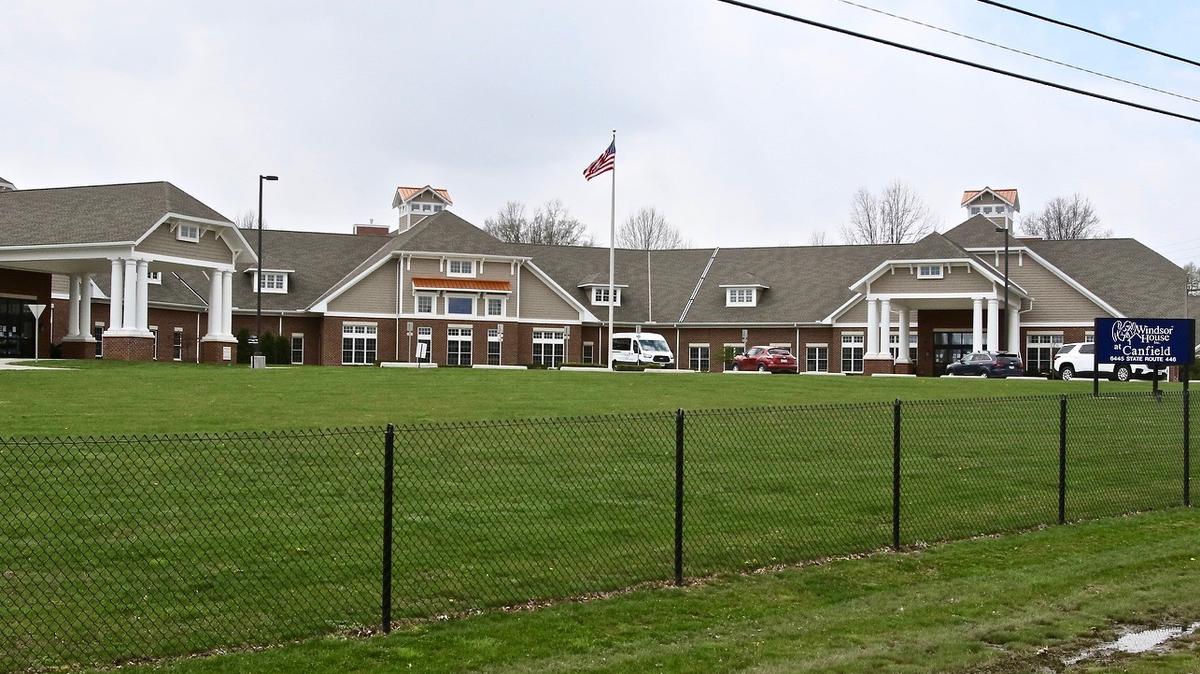
- Windsor House in Canfield: 12
- Windsor House at St. Mary's Alzheimer's Center: 5
- Woodlands Center for Rehab at Hampton Woods: 2
In Trumbull County, 15 COVID-19 cases are at long-term care facilities:
- Continuing Healthcare at the Ridge: 7
- O'Brien Memorial Health Care Center: 7
- Windsor House at Liberty Healthcare Center: 1
No Columbiana County long-term care facilities were included on the list.
According to the state's list, cases at Windsor House Inc.-operated facilities account for 27 of the 73 total cases at long-term care facilities in Mahoning and Trumbull counties — more than a third.
- Masternick Memorial Health Care Center in New Middletown: 2
- Windsor House at Canfield in Canfield: 12
- Windsor House at St. Mary's Alzheimer Center in Columbiana: 5
- Windsor House at O'Brien Memorial Health Care Center in Masury: 7
- Windsor House at Liberty Healthcare Center in Liberty: 1
Mahoning Matters has received multiple anonymous tips about the nursing provider's response to the pandemic in its facilities, however, Windsor House representatives have not returned repeated calls for verification or comment. The provider this week, however, issued a press release to other media outlets, which has not been made available to Mahoning Matters.
List discrepancies
The state's list — which will be updated weekly — should be treated as a "snapshot" of a particular point in time, said John Saulitis, director of the ombudsmen program at Direction Home of Eastern Ohio, which advocates for nursing home residents and their families.
Initial reporting will take some time to become reliable, and numbers may not match as they're communicated from hospitals to local health departments and eventually the state. It's unclear when a case should be "confirmed" under the state's new reporting, he said.
It's also unclear at this time whether the list's numbers are current or cumulative.
Similar to case reporting statewide, the number of COVID-19 cases at Ohio's long-term care facilities will likely spike as testing becomes more available, Saulitis said. That would not mean there are suddenly more cases, rather more cases have been confirmed.
Furthermore, Saulitis said ombudsmen are aware of cases that weren't included on the list. Mahoning Matters has also received tips suggesting the data is not complete.
An anonymous tipster said a staff member at Greenbriar Healthcare Center in Boardman — which is owned by CommuniCare of Cincinnati — tested positive for the coronavirus April 1. The tipster claimed the employee continued interacting with patients and the facility did not notify staff of the case until Monday, 13 days later, when the state announced its order requiring nursing homes to report confirmed cases.
Fred Stratmann, CommuniCare spokesperson, on Thursday confirmed a staff member tested positive but said the employee was a part-time nurse who hasn't worked at the facility in the last three weeks.
As for the absence of Greenbriar from the state list, Stratmann said CommuniCare was not sure if they were required to report the employee due to lack of specific guidelines from the state.
"From an operational [standpoint], do you get family members worked up into a panic when things might not be true?" Stratmann asked. "I believe in this instance, we were waiting for confirmation. When that happens, you notify the patients they have been potentially exposed and you certainly notify the family members and you isolate the residents who may be at risk. That's what they did in this case."
Stratmann said the facility has been screening residents each shift since March 3, looking for temperature or respiratory issues, and isolating residents according to state guidelines.
CommuniCare also operates Canfield Healthcare Center, Austintown Healthcare Center and Salem North Healthcare Center and Salem West Healthcare Center, none of which made the state's list Thursday.
Greenbriar has not been cited for deficiencies in infection prevention or control in the last three years, according to the U.S. Centers for Medicare and Medicaid Services.
Is this list useful?
Despite reporting discrepancies like the one at Greenbriar, Saulitis said, "For the most part, the facilities have been upfront."
But in announcing the order Monday, Ohio Health Director Dr. Amy Acton encouraged Ohioans to "proceed with caution" regarding the information. She cited a situation in Dayton where a food truck wouldn't drop off pallets of food to a local nursing home at which there had been an outbreak.
"It's not the fault of the nursing home," said Acton. "This is not a blame game."
Saulitis on Tuesday echoed her words: "This is not the time to point fingers. This is the time to identify who did what right."
Many facilities have been doing follow-up contacts with families of residents, and ombudsmen are checking this. Though Acton this week talked of the "stigma" nursing homes could face by reporting COVID-19 cases in their facilities, Saulitis said he hasn't seen the type of public outcry they feared.
"Sharing the information with the public didn't cause the world to end," said Saulitis. "Sunshine's the best disinfectant. ... Having that information out there takes away any thought of, 'this is being covered up or people [want] to keep this quiet because of a conspiracy thing."
If anything, Saulitis said the list helps draw attention to the most vulnerable populations living in nursing homes, who should be a chief focus of the state and their local communities during this pandemic.
"Congregate living really needs to have the focus placed on it because of the risks of those populations there," said Saulitis. "The consequences of not dealing with that can be extreme, as we see in some cases. So, therefore, the public attention to the nursing home issue is very important.
"The laser beams need to be focused on that — all hands on deck from all the relevant agencies."
Protecting nursing homes
As Ohio Department of Health-led epidemiological teams have visited hardest-hit nursing homes in the area, they've instructed facilities on isolating certain portions of those facilities with only infected residents, along with those who care for them, Mahoning County Health Commissioner Ryan Tekac said during a Thursday media briefing.
Because of their layout or size, it's sometimes "difficult," but some facilities are divided into wings, he said.
"If you have a number of [infected] patients in a wing, that becomes your 'isolation wing.' ... As an employee, if you're working in that wing, that's the only wing you're working in so you have less of a chance of cross-contaminating those patients," he said.
Some of CommuniCare's facilities outside Ohio have been hit harder by the virus, Stratmann said. There, dedicated isolation areas have been established, with double-plastic walls, negative pressure environments and isolated HVAC systems.
Stratmann said residents are also being separated into groups, as the U.S. Centers for Disease Control and Prevention recommends to preserve masks, gloves and gowns, which are hard to come by.
"A good chunk of that logic for that is to make sure that you're able to maximize the usage of your PPE," he said. "Ten buildings using PPE for one or two patients is not as effective as one building using the same amount of PPE for roughly 20 patients. ... And PPE is so hard to get these days."
Tekac did not specify where those state-led teams have visited in Mahoning County, but said local officials are passing on what they've learned on managing the virus' spread to other facilities in the county.
When more tests become available, Saulitis said he feels some should be diverted to nursing home staff. When asked if they would be considered healthcare workers — and receive prioritized testing under state guidelines — he said, "That isn't clear."
More on nursing homes from Mahoning Matters
- The confluence of vulnerable populations living in congregate settings makes nursing homes particularly vulnerable to COVID-19 outbreaks. Here's how local facilities prepared for the pandemic.
- On April 8, Dr. Amy Acton, Ohio Department of Health director, cited Youngstown nursing homes as part of a cluster of coronavirus cases. The state had previously refused to release the specifics.
- Gov. Mike DeWine announced Monday that nursing homes would be required to release the number of positive coronavirus cases at each facility.
- Although the order was not released until Wednesday, the state expected nursing homes to release the information according to announced guidelines. The Ohio Department of Health posted the list Thursday morning.
- In February, Mahoning Matters reviewed the inspection reports for nursing homes in Mahoning and Trumbull counties.
This story was originally published April 17, 2020 at 4:11 AM with the headline "Ohio is shining a light on COVID-19 in long-term care facilities."